Development of Biomedical Low-Modulus Alloys
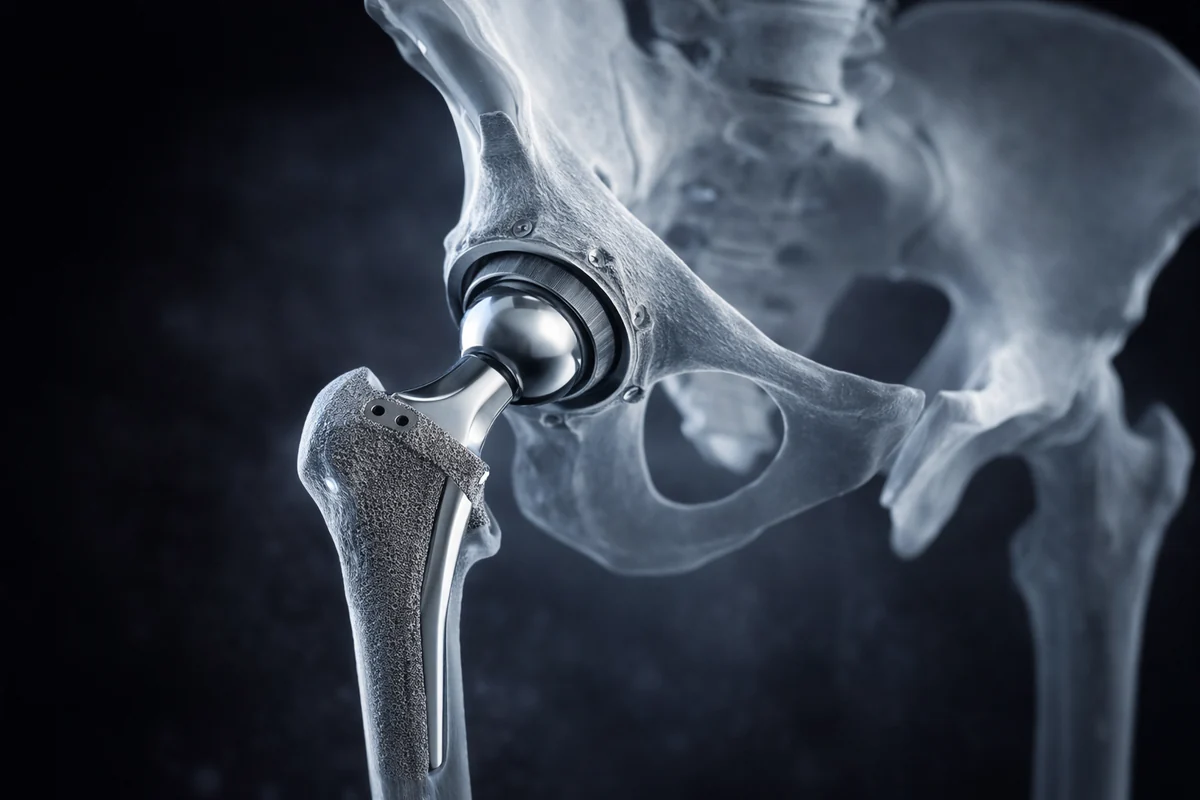
Pure Ti and other Ti alloys exhibit excellent biocompatibility and are therefore widely used as implant materials in the medical field. However, a major issue associated with metallic implant materials, such as artificial hip joints, is the significant difference in stiffness compared with natural bone. Implants embedded in the body are in direct contact with surrounding bone. When mechanical loads are applied during activities such as walking, stress is preferentially transferred to the material with the higher Young’s modulus—namely, the implant. This phenomenon is known as stress shielding. When stress shielding occurs, mechanical stress is not properly transferred to the bone, leading to bone resorption and weakening. As a result, implants with a Young’s modulus significantly different from that of bone can cause bone density loss and an increased risk of fracture.
To address this issue, our laboratory is developing Ti and/or Zr-based alloys with a Young’s modulus closer to that of bone. Among Ti alloys, those in which the body-centered cubic (BCC) β phase is stabilized have been reported to exhibit strong crystallographic orientation dependence of Young’s modulus. Since crystallographic texture can be controlled by adjusting rolling conditions and heat treatment parameters, aligning low-modulus crystal orientations along the deformation direction may enable the development of low Young’s modulus alloys.
However, the mechanisms by which composition, rolling, heat treatment, and other processing parameters influence the final crystallographic orientation remain unclear, and several challenges must be addressed to achieve further modulus reduction. For example, it is necessary to understand how specific crystal orientations evolve during rolling and heat treatment, how grains grow at elevated temperatures, and how these processes depend on alloying elements.
By systematically investigating these mechanisms through orientation analysis, electron microscopy, and texture analysis, we aim to develop optimal alloy compositions and processing routes that achieve Young’s modulus values suitable for biomedical implants.
In addition to Young’s modulus, mechanical properties such as strength, ductility, superelasticity, and shape memory behavior can also be significantly improved through crystallographic texture control. Because texture and microstructural control strongly influence the final properties of materials, elucidating the mechanisms of texture development and establishing robust processing strategies may lead not only to improved biomedical Ti alloys but also to major breakthroughs in the broader field of materials development.