Development of Biomedical Shape Memory and Superelastic Alloys
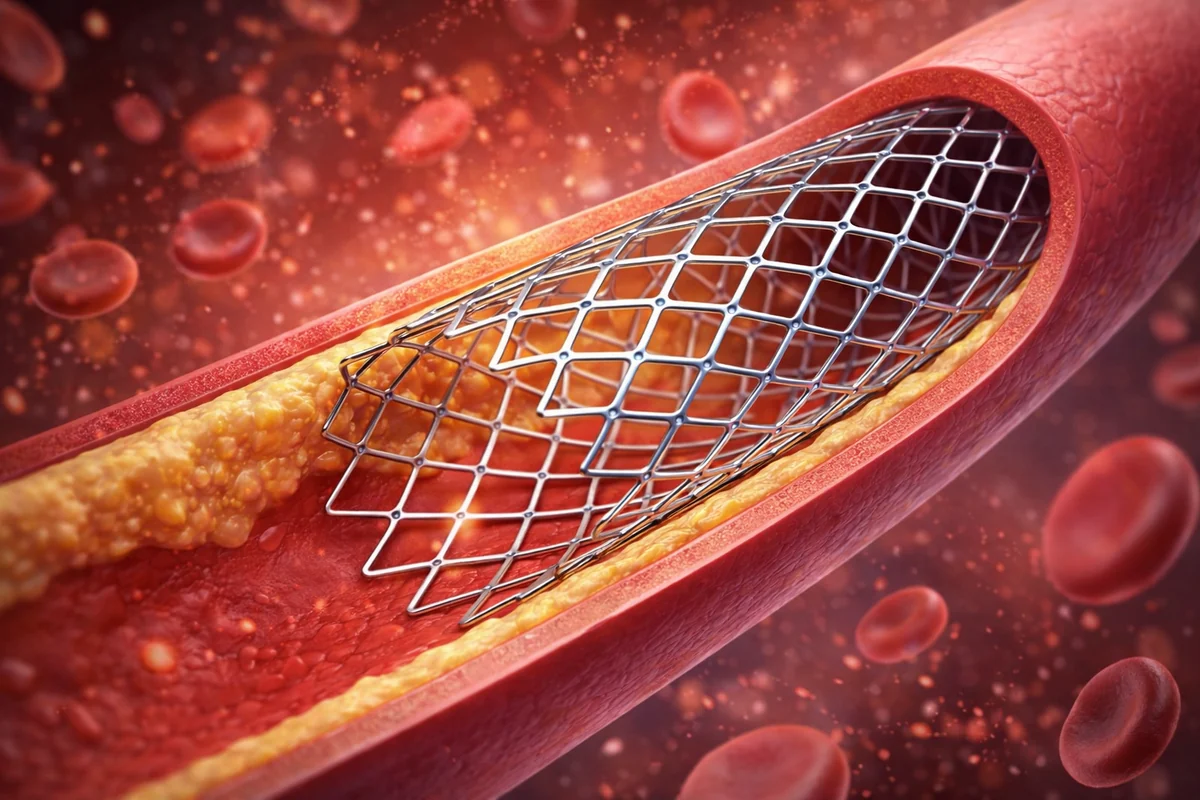
Shape memory alloys are widely used in the medical field, where their shape memory and superelastic properties are applied to medical devices such as guidewires, stents, and orthodontic archwires.
Currently, the only shape memory alloy commercially used in medical applications is the Ti–Ni alloy (Nitinol). However, Ni, which accounts for approximately half of the alloy composition, has strong allergenic potential. Although very few problems related to Ni have been reported in clinical applications of Ti–Ni alloys, this is thought to be due to their ordered crystal structure and the strong bonding between Ti and Ni, which suppresses Ni ion release. Nevertheless, concerns regarding Ni allergy among patients cannot be completely eliminated. Therefore, to further accelerate the application of shape memory alloys in the medical field, the development of Ni-free β-type Ti-based shape memory and superelastic alloys is essential. Table 1 summarizes Ni-free β-type Ti-based shape memory alloys reported to date.
Table 1. Reported Biomedical Ni-Free β-Type Ti-Based Shape Memory Alloys
| Alloy System | Reference |
|---|---|
| Ti-Mo-Ga | H. Hosoda, Y. Omatsu and S. Miyazaki (2001) |
| Ti-Mo-Al | H. Hosoda, N. Hosoda and S. Miyazaki (2001) |
| Ti-Nb-Sn | E. Takahashi, T. Sakurai, S. Watanabe, N. Masahashi and S. Hanada (2002) |
| Ti-Nb-Al | H. Hosoda, Y. Fukui, K. Wakashima and S. Miyazaki (2003) |
| Ti-Mo-Sn | T. Maeshima and M. Nishida (2004) |
| Ti-Nb-O | J. I. Kim, H. Y. Kim, H. Hosoda and S. Miyazaki (2005) |
| Ti-Nb-Zr | J. I. Kim, H. Y. Kim, T. Inamura, H. Hosoda and S. Miyazaki (2005) |
| Ti-Nb-Ta | H. Y. Kim, S. Hashimoto, J. I. Kim, T. Inamura, H. Hosoda and S. Miyazaki (2006) |
| Ti-Nb-Pt | H. Y. Kim, N. Oshika, J. I. Kim, T. Inamura, H. Hosoda and S. Miyazaki (2007) |
β-type Ti alloys are characterized by a lower Young’s modulus (~60 GPa) compared with pure Ti and (α+β)-type Ti alloys (~100 GPa). Because this value is closer to that of bone (~20 GPa), β-type Ti alloys have attracted significant attention as next-generation biomedical metallic materials for bone replacement such as bone plates and artificial hip joints. In recent years, extensive research has been conducted worldwide on β-type Ti alloys, with particular emphasis on achieving both low Young’s modulus and high strength—properties.
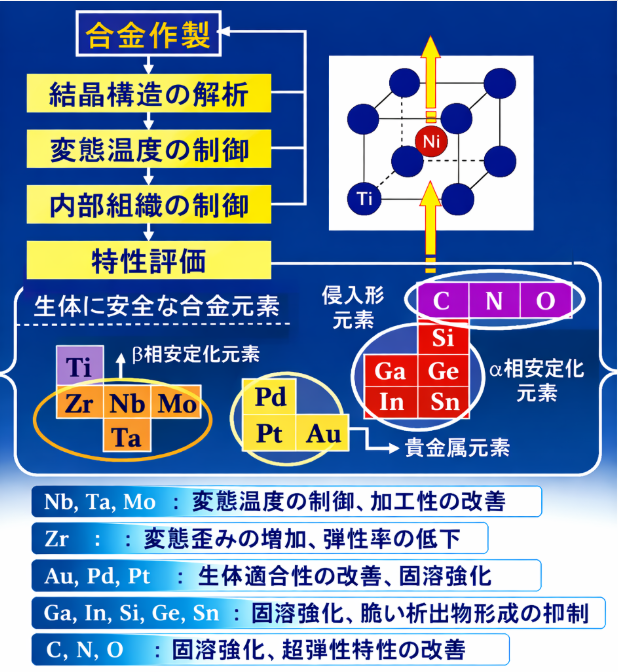
Our research group has developed new alloys based on Ti–Nb and Ti–Mo binary systems by adding biocompatible elements such as Ta, Zr, Hf, Au, Pt, Sn, O, and N. We have systematically investigated the effects of these alloying elements on shape memory behavior, superelasticity, and mechanical properties (Fig. 1). In addition, we have reported various approaches to controlling microstructures—such as precipitates and crystallographic texture—through thermomechanical processing to further improve material performance.
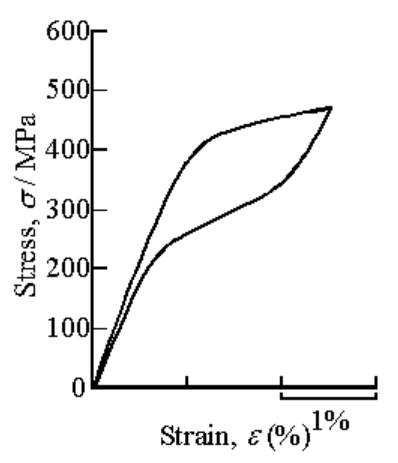
Below are examples of alloy systems we have developed. Figure 2 shows a representative stress–strain curve of a biomedical Ti-based superelastic alloy developed in our laboratory.
・Examples of developed alloy systems
Ti–Nb–(Ta, Zr) alloys, Ti–Zr–Nb–(Ta, Sn) alloys, Ti–Nb–(O, N, C) alloys, Ti–Nb–Zr–Ta–(O, N) alloys
Currently, in addition to alloy design, development, and evaluation aimed at improved performance and practical application, we are conducting crystallographic analyses of martensitic transformation and investigating strategies to further reduce the Young’s modulus of β-type Ti alloys through transformation-based mechanisms.